
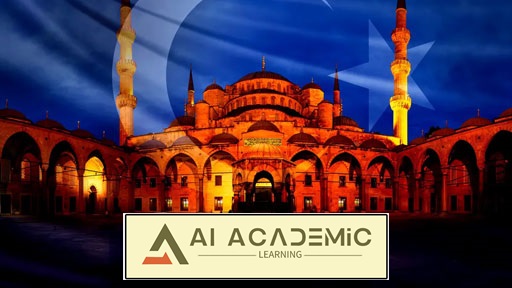
امپراتوری عثمانی با پروفسور کنت دبلیو هارل
✅ سرفصل و جزئیات آموزش
با درک داستان دراماتیک امپراتوری عثمانی — از سالهای اوایل آن بهعنوان مجموعهای از غارتکنندگان و فاتحان، تا قدرت بیچونثانیاش در قرنهای پانزدهم و ششم و فروپاشی فاجعهبار آن در بقاهای جنگ جهانی اول — میتوان درک بهتری از پیچیدگیهای کنونی خاورمیانه به دست آورد.
در طول این ۳۶ درس روشنگر، بیش از ۶۰۰ سال تاریخ را بررسی کنید که طبیعت هویت عثمانی، دستاوردهای حاکمیت سultan، و قصههای مواجهه و همکاری با غرب را پوشش میدهد.
هر درس، همانند جواهرات تاریخی مردم، رویدادها، تمها و مکانهای مرتبط با شکلگیری داستان این امپراتوری، که اغلب نادیده گرفته میشود، است. همه چیز از رومی، دوارشیران مجذوب، و اهمیت بزرگان سلطان تا جنگهای سلطان سليمان اول، سیاستهای سایزدهگار کمیته اتحاد و پیشرفت، و تولد جمهوری ترکیه تحت کمال آتاترک را پوشش میدهید.
به داستان جذابی از پیروزی و تراژدی، جنگ و صلح، پیشرفت فکری و قیام مدنی یک امپراتوری بزرگ خوش آمدید، که در همهٔ شکوه و بزرگی خود، میراث مهمی را پشت سر گذاشته است که آینده کشورهای بالکان، جمهوری ترکیه، و جهان عرب – و ما در غرب – را شکل خواهد داد.
Lecture
01:Sublime Porte: Visions of the Ottoman Empire
How should one consider the vast history of the Ottoman Empire? Professor Harl sets the stage for the lectures to come with a consideration of key themes in the empire's journey from “Sublime Porte” to “Sick Man of Europe” - as well as the distorting images of Orientalism....
02:Seljuk Turks in Asia Minor
Ottoman sultans traced their origins to the Oghuz Turks of the Central Eurasian steppes, whose nomadic ways of life were transformed by Islam. Follow along as the subsequent Seljuk Turks evolve from raiders to conquerors - and spark conflict with Western Europe's religious pilgrims....
03:The Islamization of Asia Minor
First, learn how the Seljuk sultans created an Islamic Turkish Anatolia, which would become the heartland of future Ottoman sultans. Then, explore Seljuk developments in architecture, decorative art, and religion - including domed mosques, medresses (religious schools), and “whirling dervishes.”...
04:Ottoman Sultans of Bursa
Meet the sultans who transformed the Ottoman sultanate into an imperial state. Among these: Orhan, who made Bursa the state's capital; Murad I and Bayezid I, who incorporated Asia Minor into the Ottoman state; and “the Thunderbolt,” who forged an empire of tributaries in the Balkans and Anatolia....
05:Defeat and Recovery, 1402-1451
The defeat of Sultan Bayezid by Tamerlane at the Battle of Angora revealed the fragile nature of the nascent Ottoman sultanate. Focus on the empire's recovery under Mehmed I Çelebi and Murad II, who made the empire into a bureaucratic monarchy and defeated the Hungarians at the Battle of Varna....
06:Mehmet the Conqueror, 1451-1481
Mehmet the Conqueror made the Ottoman sultanate a leading Muslim power by 1481. In this lecture, investigate his remarkable rule, which included the conquest of Constantinople, the remodeling of the Hagia Sophia as a mosque, and the construction of the grand, walled mini-city of Topkap?....
07:Selim the Grim and the Conquest of Cairo
In 1512, Selim emerged victorious from the ashes of a civil war and executed all challenges to his rule (earning him the sobriquet “the Grim”). Go inside Selim's military campaigns against Iran, Syria, and Egypt, which helped make the Ottoman Empire virtually synonymous with the “house of Islam.”...
08:Suleiman the Magnificent, 1520-1566
Suleiman the Magnificent presided over the zenith of the Ottoman Empire. You'll learn how, during his 46-year reign, he expanded civil bureaucracy, waged a naval war in the Mediterranean against Habsburg Spain, and also altered the imperial succession - sowing what some historians consider the seeds of the empire's downfall....
09:Sultans in Topkap?, 1566-1648
Turn now to a period of decline, most notable for the emergence of the harem as a powerful political institution. Meet sultans including Murad III, a patron of the arts (especially miniaturist painting) and Ahmet I, an ineffective 13-year-old who presided over the “Sultanate of Women.”...
10:The Sultan-Caliph and His Servants
Ottoman sultans played two roles: as sultan/warrior and as the caliph of Sunni Islam. Here, unpack the role of the sultan in the Ottoman Empire, including his relationship with the ulema (religious experts), his central administration (called “the Porte”), and with his viziers....
11:Timariots, Peasants, and Pastoralists
Between 1500 and 1800, the Ottoman Empire spread across more than 1 million square miles - but economic activity varied from region to region. Discover how groups like pastoralists and the Muslim gentry (timariots) played their own critical roles in the drama and resiliency of the rural Ottoman economy....
12:Trade, Money, and Cities
Trade was vital to the Ottoman Empire - as well as a cause for its decline from “Porte” to “Sick Man of Europe.” Trace some of the empire's most prominent trade routes, including the iconic Silk Road, as well as the British penetration of Ottoman markets in 1838....
13:Arabs under the Ottoman Caliph
For 300 years, Ottoman Sultans ruled the majority of Arabs. How did “the Porte” successfully administer the diverse Arab provinces under its control? How did “the Porte” respect Islamic traditions? Why were the Arabs so loyal to the empire up until the early 19th century?...
14:Christians and Jews under the Porte
Under the Ottomans, Christian and Jewish subjects were classified as dhimmi (“people of the book”) and were afford legal protection and the right to practice their faith. Explore daily life in some of the Christian and Jewish communities (millet) scattered across the empire....
15:Sunni Islam and Ottoman Civilization
Go deeper inside the details of Ottoman civilization. Among the topics you'll explore are the transformation of Turkish into a new literary language; the importance of calligraphy and miniaturist painting; intellectual developments in history and geography; and, finally, the cultural influence of the Sufis....
16:Ottoman Constantinople
What was Constantinople like under Ottoman control? Professor Harl shows how the empire became a veritable paradise among Muslim cities, with markets and mosque complexes, social activities and public spaces, and the grandeur of Topkap?, which you'll see through the eyes of French Ambassadors sent in 1536....
17:The Sultan at War: The Ottoman Army
Sultans between the reigns of Murad II and Mehmet IV commanded one of the finest armies in Eurasia. Discover how the Ottoman imperial army matched Europe's best, how money was raised to meet the rising costs of war, why the Ottoman army suffered decisive defeats, and more....
18:Sultan and Shah: Challenge of Safavid Iran
The Ottoman Sultan and the Safavid Shah clashed frequently over strategic lands between the two civilizations. First, learn why Safavid Iran was the religious and ideological rival of “the Porte.” Then, examine five major wars the Ottomans waged against their rivals between 1514 and 1722....
19:Sultan and Emperor: War in the West
Visit the empire's northern border in Europe to explore its military clashes with the West. Why was fighting in Central Europe so indecisive? Why did the Long-Turkish War prove so embarrassing for three sultans? How did “the Porte” come to ease tensions with the Habsburgs after 1605?...
20:Sultan and Venice: War in the Mediterranean
Learn why Ottoman success at sea in the 1500s stemmed from Suleiman's strategic vision and the skills of his admirals. Along the way, you'll investigate Suleiman's war against Venice, the Siege of Malta, the Battle of Lepanto, and battles with another European naval power: Portugal....
21:Koprulu Viziers and Imperial Revival
Professor Harl reveals how a dynasty of Grand Viziers and bureaucrats rescued the Ottoman Empire from factions and court intrigue, then guided the empire through various crises between 1683 and 1699, helping to end the ruinous war against Venice, as well as end political instability within the House of Osman....
22:The Empire at Bay, 1699-1798
In this lecture, learn why the 1699 Treaty of Karlowitz is a turning point in Ottoman history - another that marked the empire's steady decline into the “Sick Man of Europe.” Central to this lecture: the Ottoman military's engagement with a powerful new Christian foe: Catherine the Great....
23:Napoleon Invades Ottoman Egypt
France's occupation of Egypt from 1798 to 1801 compromised the restoration of Ottoman rule in the country. And, as you'll learn, Napoleon's invasion also marked the first instance of the Muslim Middle East's encounter with modernity and political reforms based on the principles of the French Revolution....
24:Crisis: Muhammad Ali and Balkan Nationalists
Learn how Muhammad Ali exploited the confusion in Egypt after Napoleon's departure and, in 35 years, became the first successful Muslim ruler to transform Egypt into the literary and intellectual center of the Arabic-speaking world. Also, consider several Serbian and Greek revolts that rocked the Ottoman Empire....
25:Tanzimat and Modernization, 1839-1876
First, examine how the reforms of professional ministers led by Mustafa Re?id Pa?a ushered in a massive reorganization (Tanzimat) of both the Ottoman State and Ottoman society. Then, consider how Tanzimat widened divisions within Ottoman society and failed to make the empire a member of the Concert of Europe....
26:Defeat and Retreat: The Sick Man of Europe
How did the Crimean War vindicate the reformers of Tanzimat? Why was the Treaty of Paris a strategic victory for “the Porte” -that came at a high price? What impact did the empire's catastrophic defeat during the Russo-Turkish War have on its future with the Concert of Europe?...
27:The Sultan Returns: Abdul Hamid II, 1876-1908
On December 23, 1876, Sultan Abdül Hamid II proclaimed the first Ottoman constitution. Eleven months later, it was suspended, along with its Parliament. Go inside this period of continued reform, which tied “the Porte” to an alliance with Germany and ultimately led to Sultan Hamid II's downfall....
28:Constitutional Reform, 1908-1913
Turn now to the Second Constitutional Period, which raised hopes for imperial recovery and reform but ended with the domination of power by the Committee of Union and Progress (CUP). Thus emerged a shadow government that became an unintended dress rehearsal for future one‑party dictatorships....
29:War in Libya and the Balkans, 1911-1913
Discover why the Ottoman government was ill‑prepared for both the Italo‑Turkish War and the First Balkan War. Experience its stunning defeat by the improbable alliance of Serbia, Greece, and Bulgaria. Learn why the Treaty of Constantinople almost assured the outbreak of another Balkan war....
30:The Road to World War I
Using recent research (based on Russian and Ottoman archives), learn why the Ottoman Empire entered the First World War. What role did the defeats of 1911‑1913 play in the road to war? Why did Ottoman ministers negotiate favorable terms with Germany in exchange for entrance into the war?...
31:The Empire at Total War, 1914‑1916
Though it entered the First World War enthusiastically, the Ottoman Empire was not prepared for total war. In this lecture, focus on the empire's offensives against the Russian Caucasus Army and the Suez Canal, as well as its struggle against an impending British invasion in the Dardanelles....
32:Ottoman Collapse, 1916‑1918
By 1916, the Ottoman Empire was fighting for its very survival. Professor Harl reveals the impact of the Russian Revolution on the war, the steady deterioration of the empire over the course of the fighting, and the army's ultimate collapse, which came suddenly and unexpectedly, in late 1918....
33:Mustafa Kemal, Ataturk
Meet the “father of the Turks”: Mustafa Kemal. By following his life and career, you'll come away from this fascinating lecture with a well-rounded understanding of how he came to play such a decisive role in the modernization of Turkish civilization and the creation of the Turkish Republic....
34:Casualties of War and Ethnic Cleansing
The best estimate is that a total of 800,000 Armenians died between 1915 and 1921. In this powerful lecture, examine why the destruction of the Armenian community has come to be seen as the first in a series of similar events that would wreak havoc on the 20th century....
35:The Emergence of the Turkish Republic
Under Mustafa Kemal, Islamic tradition was seen as an obstacle to joining European civilization. How did Kemal and the Turkish Parliament approach the daunting task of transforming the imperial heartland into the Turkish Republic? How are Turks today wrestling with their Ottoman legacy?...
36:Nation-States, Islam, and the Ottoman Legacy
Conclude with an insightful look at how the legacy of the Ottoman Empire still influences the Middle East - and will continue to do so in the future. Each of the empire's successor states, you'll learn, has its own perceptions of this legacy, and its own lessons learned from history....
امپراتوری عثمانی با پروفسور کنت دبلیو هارل
-
سُلِمت پورته: دیدگاههای امپراتوری عثمانی None
-
توارسیهای سلجوقی در آسیای کوچک None
-
اسلامیسازی آسیای کوچک None
-
سولتانهای عثمانی بورسا None
-
هزیمت و ریکاوری، 1402-1451 None
-
محمد فاتح، 1451-1481 None
-
سلایم خندان و فتح قاهره None
-
سلیمان یکم، 1520-1566 None
-
سولتانهای در توپکاپی، 1566-1648 None
-
سولتان-کاپی و خدمهاش None
-
تیماروتها، کشاورزان، و حیوانداران None
-
تجارت، پول، و شهرها None
-
اعراب در زمان خلیفه عثمانی None
-
عربان زیر کاپی عثمانی None
-
اسلام صعودی و تمدن عثمانی None
-
کنسطنطاین عثمانی None
-
سولتان در جنگ: ارتش عثمانی None
-
سولتان و شاه: چالش ایران صفوی None
-
سولتان و امپراتور: جنگ در غرب None
-
سولتان و وین، جنگ در مدیترانه None
-
وزیران کوپرول و نوظهورگی امپراتوری None
-
امپراتوری در باریکه، 1699-1798 None
-
ناپولئون به مصر عثمانی حمله میکند None
-
بحران: محمد علی و ملیگرایان بالکان None
-
تانزیمات و مدرنیزیشن، 1839-1876 None
-
هزیمت و عقبنشینی: مرد بیمار قارهٔ اروپا None
-
سولتان بازمیگردد: عبد الحمید دوم، 1876-1908 None
-
اصلاح قانونگذاری، 1908-1913 None
-
جنگ در لیبی و بالکان، 1911-1913 None
-
راه به جنگ جهانی اول None
-
امپراتوری در جنگ تمامعیار، 1914-1916 None
-
فروپاشی عثمانی، 1916-1918 None
-
مصطفی کمال، آتاترک None
-
ضایعات جنگی و پاکسازی قومی None
-
بروز جمهوری ترکیه None
-
کشورهای مستقل، اسلام و میراث عثمانی None
مشخصات آموزش
امپراتوری عثمانی با پروفسور کنت دبلیو هارل
- تاریخ به روز رسانی: 1404/09/07
- سطح دوره:
- تعداد درس:36
- مدت زمان :None
- حجم :15.91GB
- زبان:دوبله زبان فارسی
- دوره آموزشی:AI Academy
آموزش های مرتبط

-
سطح دوره:
-
زبان: دوبله فارسی

- زمان: 04:00:26
- تعداد درس: 31
-
سطح دوره:
-
زبان: دوبله فارسی

- زمان: 01:57:58
- تعداد درس: 29
-
سطح دوره:
-
زبان: دوبله فارسی
- زمان: 39:24
- تعداد درس: 25
-
سطح دوره:
-
زبان: دوبله فارسی

- زمان: 04:52:39
- تعداد درس: 73
-
سطح دوره:
-
زبان: دوبله فارسی

- زمان: 0:12:06
- تعداد درس: 8
-
سطح دوره:
-
زبان: دوبله فارسی

-
سطح دوره:
-
زبان: دوبله فارسی

- زمان: 1:48:18
- تعداد درس: 16
-
سطح دوره:
-
زبان: دوبله فارسی

- زمان: 1:40:52
- تعداد درس: 14
-
سطح دوره:
-
زبان: دوبله فارسی